

How to Find High Quality Discount Apparel in 2026
Table of Contents
- Why Most Discount Apparel Fails the Quality Test
- How to Spot Quality Clothing: 7 Checks Before You Buy
- Best Online Discount Clothing Stores and How to Vet Them
- Time Your Purchases Around Retail Markdowns and Off-Season Sales
- How to Build a Capsule Wardrobe on a Budget
- Second-Hand, Consignment, and Liquidation Channels Worth Checking
- Make Discount Apparel Last: Care That Protects Your Investment
- Frequently Asked Questions
Last Updated: September 10, 2026
Why Most Discount Apparel Fails the Quality Test
Learning how to find high quality discount apparel starts with understanding why so much of it disappoints. Discount apparel is clothing sold below standard retail price, and the gap between a genuine bargain and a disposable mistake comes down to construction, fiber content, and where you bought it.
The frustration is real: fast fashion flooded the market with garments built to survive a few washes, and most shoppers never learned what separates a $12 keeper from a $12 regret. Below, we'll show you exactly how to tell the difference before you spend a dollar.
How to Spot Quality Clothing: 7 Checks Before You Buy
Quality clothing is a garment whose fabric, stitching, and construction hold up through repeated wear and washing. Most guides stop at "check the seams." That advice is fine but incomplete, the real skill is reading what a garment is made of and how it was assembled, then translating that into a prediction about how it will behave after twenty washes. Run these seven checks before any purchase:
- Read the fabric label for fiber percentages, not marketing names
- Turn the garment inside out and inspect seam finishing
- Check stitch density along stress points like shoulders and armholes
- Test buttons, zippers, and closures for secure attachment
- Look for pattern matching at seams on prints and stripes
- Squeeze the fabric and check whether it springs back or stays wrinkled
- Confirm the return policy before checkout
That last one matters more than most people admit. A generous return window is what makes trying an unfamiliar brand low-risk.
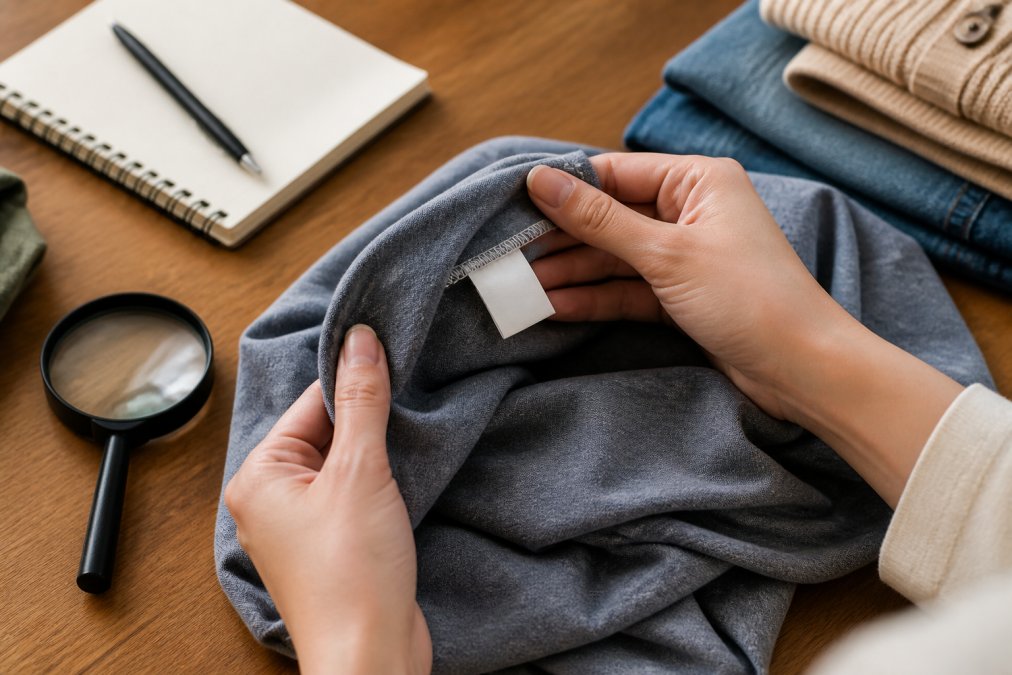
Read the Fabric Label First
Fiber content is the single most predictive number on a garment, and almost no discount-shopping guide teaches you how to read it. The label lists fibers by percentage, highest first. Here is what the common ones actually do:
- Cotton, breathable, absorbs moisture, softens with washing, but shrinks unless pre-shrunk and wrinkles easily. Look for 100% cotton or cotton blended with a small amount of elastane (2-5%) for stretch recovery.
- Wool, temperature-regulating and odor-resistant, holds shape well, but pills if the fiber is short-staple. Merino is finer and less itchy than standard wool.
- Linen, strong, cool, and gets softer over time, but creases hard and has almost no stretch.
- Silk, lightweight and temperature-adaptive, but fragile in the wash and prone to sun fading.
- Polyester, durable, wrinkle-resistant, and cheap, but traps odor and can pill. It is not inherently bad; a polyester blend in activewear or outerwear is often the right call.
- Rayon/viscose, drapes beautifully and feels cool, but weak when wet and prone to shrinking. Hand-wash or dry-clean.
- Nylon, strong and abrasion-resistant, common in outerwear and hosiery.
- Acrylic, a wool substitute that is warm and cheap, but pills and holds static.
A common pattern is that a 60/40 cotton-polyester blend resists wrinkling and dries fast, which suits everyday wear, while a 95/5 cotton-elastane blend gives you stretch without losing the cotton feel (peer-reviewed research). The label tells you what you are actually paying for, and a garment that lists "premium fabric" with no percentages is telling you the seller does not want you to know.
Inspect Stitching and Seams
Stitch density and seam integrity predict how a garment survives its first year. Look for tight, even stitching with no loose threads or skipped sections. Seams should be finished, not raw and fraying. On knits, a coverstitch hem (two parallel rows of stitching on the outside) is a sign of better construction than a single serged edge. On wovens, French seams or flat-felled seams, where the raw edge is folded inside, outlast a simple overlock finish because there is no exposed edge to fray.
Best Online Discount Clothing Stores and How to Vet Them
The best online discount clothing stores combine real markdowns with transparent return policies and customer reviews. Vet any store against four criteria before you commit:
| Check | What to Look For | Red Flag |
|---|---|---|
| Return policy | 30+ day window, clear terms | No returns or store credit only |
| Reviews | Verified purchase reviews with photos | Only 5-star reviews, no dates |
| Product details | Full fiber content and measurements | Vague "premium fabric" claims |
| Pricing pattern | Consistent markdowns | Permanent "90% off" urgency |
TDR Shopper offers a curated selection at 50% off. For a wardrobe staple you'll actually wear, the Essentials Women's Short-Sleeve Scoopneck Tunic, Pack of 2 runs $6.95 for two, which works out to under four dollars per piece. That's the kind of cost-per-wear math that makes a discount worth taking.
Time Your Purchases Around Retail Markdowns and Off-Season Sales
Retail markdowns follow a predictable rhythm, and shopping off-season is the single easiest way to cut your clothing spend. Retailers clear inventory on a schedule, and knowing that schedule beats any coupon code.
The Off-Season Calendar That Saves the Most
- January: Winter coats, boots, and cold-weather layers
- April: Spring jackets and transitional pieces
- July: Summer dresses, shorts, and sandals
- October: Back-to-school leftovers and fall basics
- November: Early holiday markdowns before Black Friday
Buying a wool coat in January rather than October routinely means paying a fraction of the original price for the same garment (bls.gov). The trade-off is selection: sizes and colors thin out fast, so shop the first week of the markdown, not the last.
How to Build a Capsule Wardrobe on a Budget
A capsule wardrobe is a small, coordinated collection of versatile pieces that mix and match across seasons. Building one on a budget means buying fewer, better items and leaning on wardrobe staples that work with everything else you own.
Start with a neutral base: two pairs of well-fitting pants, three tops that layer, one jacket, and one pair of shoes you can wear daily. Add color and personality only after the base is set. For the tops, a breathable everyday tee like the Drake Waterfowl Men's Stacked Logo T-Shirt at $16.72 holds up to regular rotation, and a relaxed Fisoew Women's Wide Leg Drawstring Pants at $14.99 covers casual days without looking thrown together.

Second-Hand, Consignment, and Liquidation Channels Worth Checking
Second-hand and consignment channels put designer labels within reach at a fraction of retail, and liquidation sellers move inventory that never sold at full price. Thrift stores reward patience: go early in the week, bring a list, and check garment construction the same way you would at full price. Consignment shops curate more heavily, so quality assessment is faster but prices run higher. Luxury resale platforms sit at the top of that ladder, offering authenticated goods for shoppers who want a specific label.
The catch with liquidation is inconsistency. You may find a genuine bargain next to a defective return, which is why the seven checks above matter even more in these channels.
Make Discount Apparel Last: Care That Protects Your Investment
Care is what turns a good discount into a long-term win, and it is the step almost every discount-shopping guide skips. The reason is mechanical: heat and agitation are what break down fibers, shrink cotton, and destroy the elastic in waistbands and cuffs. Every care decision you make is really a decision about how much heat and friction the garment absorbs.
Wash by Fiber, Not by Habit
- Cotton, cold water, and expect a small amount of shrinkage on the first wash unless the label says pre-shrunk. Tumble dry low or line dry.
- Wool, hand-wash or use a wool cycle in cold water with a gentle detergent. Never wring it out; press the water out flat. Lay flat to dry. Heat and agitation are what cause wool to felt and shrink permanently.
- Linen, machine-wash cold on a gentle cycle; it gets softer with each wash. Remove from the dryer slightly damp and hang to finish, or it will crease sharply.
- Silk, hand-wash cold or dry-clean. Do not wring. Dry flat away from direct sun, which fades the dye.
- Rayon/viscose, hand-wash cold or dry-clean. It loses strength when wet, so do not twist or hang heavy pieces while soaked.
- Synthetics (polyester, nylon, acrylic), cold or warm wash, low dryer heat. High heat is what sets in odors and causes pilling on acrylic.
Protect the Details
Turn garments inside out before washing to protect surface texture and any print. Use mesh bags for anything with a delicate closure, lace, or embellishment. Zip zippers and button buttons before washing so they do not snag other items. Wash denim inside out and sparingly, every wash fades indigo and stresses the seams.
Dry and Store With Intent
Store knitwear folded rather than hung so shoulders keep their shape; hanging a heavy sweater stretches it permanently. Use padded or wide hangers for jackets and blouses. Cedar blocks or lavender sachets deter moths from wool and silk without the chemical smell of mothballs.
Repair Before You Replace
A loose button, a dropped hem, or a small hole is not the end of a garment, it is a ten-minute fix. Keep a basic sewing kit and learn two stitches: the running stitch for hems and the whip stitch for closing seams. Replacing a button the moment it loosens prevents the loss of the button and the search for a match later. Treating a stain immediately, cold water and a drop of dish soap for most food stains, before it sets, saves more garments than any detergent (cleaninginstitute.org).
Frequently Asked Questions
Where can I buy cheap but high-quality clothes?
Start with off-price retailers and online discount stores that carry recognizable labels rather than unbranded inventory. Check the fabric label before buying: natural fibers like cotton, linen, and wool outlast synthetic blends in most cases. Time purchases around end-of-season clearance events, when retailers clear inventory to make room for new stock. Second-hand and consignment shops also carry designer labels at a fraction of retail price. At TDR Shopper, every item is listed at 50% off, including pieces like the Essentials Women's Scoopneck Tunic 2-pack at $6.95.
How do you spot high-quality fabric when shopping online?
Look for the fabric composition listed in the product description, not just the marketing copy. A cotton-polyester blend like 60% cotton and 40% polyester, such as the Drake Waterfowl T-Shirt, balances breathability with durability. Check the garment weight when listed, since heavier fabrics generally hold their shape longer. Read customer reviews for mentions of pilling, shrinking, or fading after washing. If a listing hides the fabric content entirely, treat that as a warning sign and keep scrolling.
What is the 3-3-3 rule for clothing?
The 3-3-3 rule is a capsule wardrobe guideline: three tops, three bottoms, and three pairs of shoes that can be mixed into at least nine outfits. The goal is to buy fewer pieces that work together rather than filling a closet with items that only match one thing. When you apply this rule to discount apparel shopping, you filter out impulse buys and focus on wardrobe staples that earn their place. A pair of wide-leg pants like the Fisoew style at $14.99 can anchor several outfits on its own.
Are discount apparel sites worth the investment?
They are worth it when you verify quality before buying. Check fabric composition, read return policies, and look for customer ratings on individual products. Sites that sell recognizable brand names at a discount tend to be safer than those pushing generic inventory with no reviews. The cost-per-wear math matters more than the sticker price: a $15 shirt worn 50 times costs 30 cents per wear, while a $5 shirt that falls apart after three washes costs far more. Buy from sellers with clear return policies so a bad item is not a sunk cost.
The hard part of discount shopping isn't finding a low price. It's finding a low price on something that survives past the third wash. That's exactly the problem TDR Shopper was built to solve: a curated selection across fashion, home, and lifestyle categories, everything at 50% off, with the range to cover wardrobe staples and everyday essentials in one place. Browse the collection, check the fabric labels, and add to cart with confidence.