

Why Discount Stores Have Changing Inventory: 2026 Guide
Table of Contents
- Why Discount Store Inventory Changes So Often
- How Off-Price Retailers Source Products
- Supply Chain Disruption and Seasonal Fluctuations
- Real-Time Inventory Management and Demand Forecasting
- The Treasure Hunt Effect: Why Rotating Stock Keeps Shoppers Coming Back
- Best Practices for Discount Shopping in 2026
- Tips for Saving Money on Groceries at Discount Stores
- Conclusion
- Frequently Asked Questions
Last Updated: September 11, 2026
Why Discount Store Inventory Changes So Often
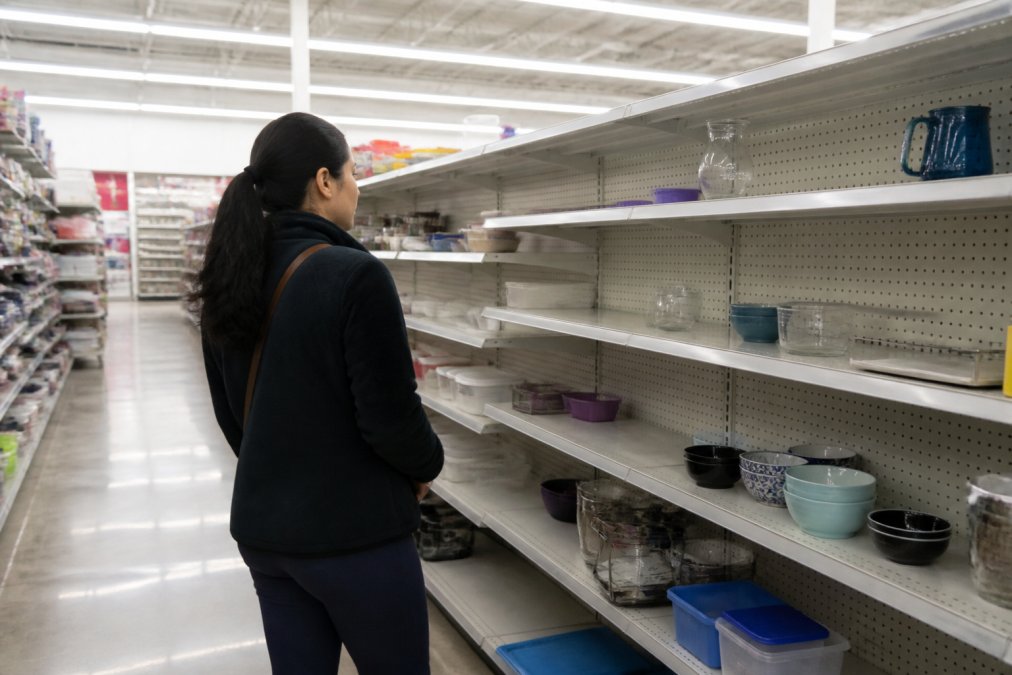
Walk into any off-price retailer twice in one month and you'll see a different store. That's not poor planning. It's the business model. Discount store inventory changes constantly because these retailers buy surplus goods in one-time deals rather than through standing orders, then sell through each batch and replace it with whatever becomes available next. This guide from TDR Shopper breaks down where that merchandise comes from, why supply chain swings make it unpredictable, and how to shop it well in 2026.
The core mechanic is simple: off-price retail is the practice of buying branded and closeout merchandise at below-wholesale prices and selling it at a discount, without a fixed assortment. Traditional retailers commit to a product lineup months ahead. Off-price buyers commit to nothing until a supplier needs to move goods fast.
That difference explains nearly everything shoppers notice, from the rotating aisles to the item you loved and can never find again.
Federal Trade Commission guidance on retail pricing and advertising
How Off-Price Retailers Source Products
Off-price retailers source through opportunistic buying rather than seasonal procurement. Buyers watch for manufacturers, department stores, and importers who need to clear goods quickly, then negotiate a one-time purchase at a steep discount. No long-term contract, no reorder guarantee.
That's why the same chain can carry a national apparel brand one week and a regional houseware label the next. The assortment follows the deal, not a planogram.
Overstock, Canceled Orders, and Irregular Items
Three sources supply most of what lands on those shelves:
- Overstock: Production runs that exceeded demand, or goods a full-price retailer couldn't sell through.
- Canceled orders: Orders a buyer walked away from, often after a missed shipping window or a change in plans.
- Irregular items: Products with a cosmetic flaw, a mislabeled package, or packaging damaged in transit. The product works; the box doesn't.
A common mistake is assuming "irregular" means defective. In practice, it usually means a seam sewn slightly off or a dented carton. Check the item itself, not the box.
Supply Chain Disruption and Seasonal Fluctuations
Supply chain disruption is the single biggest driver of what shows up and when. When a port backs up, a factory misses a deadline, or a retailer over-orders for a holiday, that excess has to go somewhere. Off-price channels absorb it.
But the mechanism is more specific than most guides admit. Off-price buyers don't just wait for chaos, they build relationships with vendors and freight consolidators so that when a shipment gets stranded, they're the first call. A common pattern looks like this:
- A full-price retailer commits to a seasonal buy months in advance, often before demand signals are clear.
- A disruption hits, a port congestion event, a factory delay, a tariff change, or simply a colder-than-expected spring that kills apparel sell-through.
- The retailer cancels or renegotiates the order rather than take the markdown hit on its own floor.
- The vendor needs to move goods fast to recover cash, so it sells below wholesale to an off-price buyer.
- The off-price chain distributes the batch across hundreds of stores, often within weeks, then moves on.
That last step is why selection swings so hard. A single canceled order might land in a handful of stores and never appear in others, which is why two locations of the same chain can look completely different on the same day.
The Seasonal Calendar Behind the Swings
Seasonal fluctuations work the same way, but they follow a predictable rhythm once you know it:
- January-February: Holiday overstocks, gift sets, and winter apparel that didn't sell through.
- March-April: Spring break and Easter excess, plus early summer goods that arrived late.
- July-August: Summer apparel clearouts and back-to-school overruns.
- October-November: Fall and early holiday freight, often the deepest discounts on general merchandise.
Many buyers find that the best selection arrives right after a major retail season ends. That timing isn't coincidence, it's the calendar doing the work for you.
Why Disruption Cuts Both Ways
Here's the angle most guides skip: disruption isn't just a supply story, it's a sustainability story. When a full-price retailer cancels an order, the alternative to an off-price buyer is often liquidation, donation, or destruction. Off-price channels keep usable goods in circulation instead of in a landfill. That's not marketing spin, it's a structural feature of the model. The same disruption that frustrates shoppers looking for a specific item is what keeps millions of pounds of merchandise out of the waste stream each year.
Environmental Protection Agency guidance on reducing and diverting commercial waste
Real-Time Inventory Management and Demand Forecasting
Real-time inventory management means tracking stock levels as they change, rather than counting once a quarter. For off-price retailers, that system is less about planning purchases and more about moving unpredictable stock fast.
The mechanism most chains rely on is a perpetual inventory system tied to point-of-sale data. Every scan at the register updates the count in that store's system within minutes. Corporate buyers watch sell-through rates by store, by category, and by price point, then decide where to route the next incoming batch. A slow-moving item in one region gets redirected to a store where similar goods are selling faster.
Demand forecasting gets harder here too. A buyer can't forecast demand for a product they haven't acquired yet. Instead, they forecast sell-through velocity: how quickly will this batch move at this price? If it stalls, the markdown strategy kicks in and the price drops on a schedule, often every two to four weeks until the goods clear.
Why Stockouts and Stock Replenishment Stay Unpredictable
Stockouts are structural, not accidental. When a batch sells out, there's no reorder form to submit. The buyer either finds a similar deal or moves on. Stock replenishment in off-price retail means replacing a category, not a specific item.
That's the honest trade-off: you get deep discounts in exchange for zero guarantee the item will return.
The Sustainability Angle Most Guides Ignore
Here's what the standard explanation leaves out: the same system that makes inventory unpredictable is also what keeps unsold goods out of landfills. When a batch doesn't sell through at an off-price retailer, the markdown ladder pushes it down in price until it moves, rather than dumping it. And because off-price buyers acquire goods that full-price retailers and manufacturers have already written off, they extend the useful life of merchandise that would otherwise be liquidated or destroyed.
A common pattern in the industry is that off-price channels absorb inventory that has no other home. That's a waste-reduction function disguised as a discount strategy. Shoppers who care about sustainability often find that buying off-price is one of the more effective ways to keep usable goods in circulation, even if the store itself doesn't market it that way.
Federal Trade Commission guidance on environmental marketing claims
The Treasure Hunt Effect: Why Rotating Stock Keeps Shoppers Coming Back
The treasure hunt effect is the psychological pull of uncertain reward: shoppers keep returning because they might find something great, and that uncertainty is more engaging than a predictable shelf. Rotating stock isn't a side effect of the model. It's the engine.

Retailers lean into it deliberately. Store layouts shift, endcaps change weekly, and high-demand items get placed deep in the store so you walk past everything else. That's retail logistics doing marketing work.
Here's what most guides miss: the hunt cuts both ways. It drives repeat visits, but it also means you can't plan a purchase around a specific product. Shop the deal in front of you, not the one you hope returns.
Best Practices for Discount Shopping in 2026
The best practices for discount shopping come down to timing, flexibility, and knowing what a real deal looks like. Shop early in the week after a restock. Go in without a rigid list. Compare the discount against the actual current price elsewhere, not the original tag.
A simple decision framework:
| If you... | Then... | Why it works |
|---|---|---|
| Find a needed item at a deep discount | Buy it now | Stock won't restock |
| Find a maybe item | Skip it | Off-price rewards discipline |
| See an irregular item | Inspect it first | Flaws are usually cosmetic |
| Want a specific brand | Check back weekly | Timing beats searching |
If you resell, organize and price your finds properly. A pricing gun kit like the MX-5500 8 Digits Price Tag Gun handles that quickly, and [a 3-Tier Metal Rolling Cart](https://tdr-shopper.com/products/3-tier-metal-rolling-cart-on-wheels-heavy-duty-utility-cart-sturdy-3-tiered-rolling-storage-cart-with-hooks-great-for-craft-art-workspace-kitchen-snack-and-office-storage-black) keeps inventory sorted before it hits the shelf.

Tips for Saving Money on Groceries at Discount Stores
Tips for saving money on groceries at discount stores start with one rule: buy what's actually there. Grocery closeouts move fast, so flexibility saves more than loyalty to a brand.
- Shop the perimeter first. Perishables and staples turn over fastest.
- Check unit prices, not just shelf tags. A bigger box isn't always cheaper per ounce.
- Stock up on shelf-stable finds. If a pantry item you use is discounted, buy multiples.
- Go mid-morning on restock days. Shelves are fullest before the afternoon crowd.
Keep a running list of what your household actually consumes, so you recognize a genuine deal instead of a novelty. Storage helps too: [a SONGMICS 170L Laundry Hamper with Lid](https://tdr-shopper.com/products/songmics-laundry-basket-170l-laundry-hamper-with-lid-2-removable-bags) keeps bulk buys organized rather than piled in a corner.

Conclusion
The rotating shelves aren't a flaw to work around. They're the reason the prices are low, and once you understand the mechanics, you shop differently: faster decisions, fewer assumptions, better timing.
At TDR Shopper, every item is offered at 50% off, across fashion, home, kitchen, and everyday essentials, with a curated selection. You get the savings without the guesswork.
Frequently Asked Questions
Why is inventory at discount stores so unpredictable?
Discount store inventory shifts because these retailers buy overstock, canceled orders, and end-of-season merchandise in bulk rather than through steady supplier contracts. When a brand cancels an order or a department store overbought, that stock lands at a discount retailer at a steep markdown. Once it sells out, it rarely gets reordered. This is why you might find a specific brand of cookware one week and never see it again.
What do retailers do with unsold inventory?
Retailers use several channels to move unsold inventory. They mark it down through clearance events, sell it in bulk to off-price buyers, send it to liquidation companies, or donate it. Off-price retailers step in during these moments, buying large lots at 30 to 70 percent below wholesale. That discount store inventory then rotates quickly because each lot is a one-time purchase, not a recurring order.
Where do discount stores get their merchandise?
Discount stores source products from three main channels: manufacturer overruns, retailer cancellations, and closeout liquidations. A clothing brand that produced too many winter coats sells the extras to an off-price buyer. A big-box store that overestimated demand for patio furniture liquidates the surplus. Irregular items, meaning products with minor cosmetic flaws, also enter this channel. Each source creates a fresh batch of discount store inventory that sells through and disappears.
How can I save money on groceries at discount stores?
Buy shelf-stable staples when you see them, since discount store inventory rotates fast and your favorite brand may not return. Check unit prices rather than package prices to confirm the deal is real. Stock up on pantry items like rice, pasta, and canned goods when they appear. Pair store visits with a flexible list so you can swap items based on what is actually on the shelf that week.
Discount inventory will always move fast, and hesitation usually costs you the item. TDR Shopper makes the decision easier with everything at 50% off, a one-stop catalog spanning multiple categories, and a curated selection that skips the junk. Add to cart and lock in the deal while it's still on the shelf.