

Smart Shopping Strategies for Busy Parents
Table of Contents
- Smart Shopping Strategies That Actually Work
- Family Budget Meal Planning: The Foundation
- Creating an Organized Grocery List
- Best Apps for Grocery List Organization
- Time-Saving Grocery Shopping Tips
- Managing Impulse Buying and Dietary Restrictions
- Automating Your Pantry and Post-Shopping Workflow
- Conclusion
Last Updated: August 29, 2026
Smart Shopping Strategies That Actually Work
Smart shopping strategies for busy parents aren't about clipping coupons or hunting for sales. They're about building a system that saves time and money without requiring you to become a professional comparison shopper. Parents who spend 45 minutes grocery shopping weekly instead of three hours use one core principle: organization before you leave home (peer-reviewed research).
At TDR Shopper, we are dedicated to providing an exceptional shopping experience by offering a curated selection of items at an incredible 50% discount. The real value isn't finding the cheapest individual item, it's eliminating the friction that makes shopping chaotic.
This guide covers exact smart shopping strategies that work for families juggling work, kids, and competing priorities: meal planning that doesn't feel like a second job, list-making systems that stick, and tactics that cut shopping time in half.
Family Budget Meal Planning: The Foundation
Meal planning is where smart shopping strategies begin. Without it, you're reacting to what looks good rather than buying what you need. A solid meal plan answers the question before it becomes a problem: what are we eating this week?
Start with a simple structure. Pick five dinners for the week, not seven. Two nights can be leftovers, takeout, or something simple you already know works. Write those five dinners down. Next to each one, list the proteins, vegetables, and pantry items required. That list becomes your grocery shopping foundation.
A smarter approach than aiming for nightly variety is rotating the same core meals. If your family eats tacos, pasta, stir-fry, sheet pan chicken, and chili regularly, build your meal plans around those five templates. You'll buy similar ingredients each week, which means less waste and better inventory management.
The psychology of impulse buying hits hardest when you're unprepared. A parent without a meal plan walks into a store hungry and buys items that don't fit the week's plan. When you know exactly what meals you're cooking, impulse buys become obvious distractions.

Creating an Organized Grocery List
An organized grocery list is the bridge between meal planning and smart shopping. It's not just a list of items, it's a system that groups items by store layout, reduces decision-making time, and prevents forgotten essentials.
Structure your list by store layout. Most supermarkets follow the same pattern: produce, meat and dairy, packaged goods, then frozen items. Build your list in that order. When you write spinach before chicken, you move through the store in a straight line instead of backtracking.
Group items by category within each section. Under produce, list vegetables first, then fruits. Under packaged goods, group breakfast items, snacks, and pantry staples separately. This organization cuts shopping time because you're not wandering aisles looking for forgotten items.
A digital master list works better than paper for most families. You can update it throughout the week as you notice you're running low on something. Many parents use shared digital lists so everyone in the household can add items as needed. This prevents duplicate buys and ensures nothing gets forgotten.
Include quantities on your list. Instead of writing "milk," write "milk (2 gallons)." Instead of "eggs," write "eggs (2 dozen)." Quantities prevent you from grabbing one when you need two, or buying excess because you're uncertain how much you use.
Best Apps for Grocery List Organization
Digital list-making apps have become essential for families managing smart shopping strategies. The best ones sync across devices, allow sharing with household members, and integrate reminders for recurring items.
Solid grocery list apps include voice input (so you can add items while cooking), barcode scanning for quick additions, and price comparison across local stores. Some apps let you save previous shopping lists, which is useful if you're rotating the same meal plans weekly.
The app you choose matters less than consistency. Pick one and use it. If your household is split between three different list apps, the system breaks down.
One often-overlooked feature is the ability to add notes to items. If you need a specific brand or have a dietary restriction to remember, notes prevent you from buying the wrong product. A note like "gluten-free pasta only" or "organic carrots preferred" takes five seconds to add and saves the frustration of buying the wrong item.
Time-Saving Grocery Shopping Tips
Time-saving grocery shopping tips separate efficient shoppers from those who treat the supermarket like a leisure activity. The fastest shoppers follow three core rules: stick to your list, avoid the center aisles, and use self-checkout when possible.
Sticking to your list sounds obvious until you're in the store and your kid asks for cereal or you see a sale on something not on your list. The rule is simple: if it's not on the list, it doesn't go in the cart. Sales are designed to pull you away from your plan. A 20% discount on something you don't need isn't a deal, it's an expense.
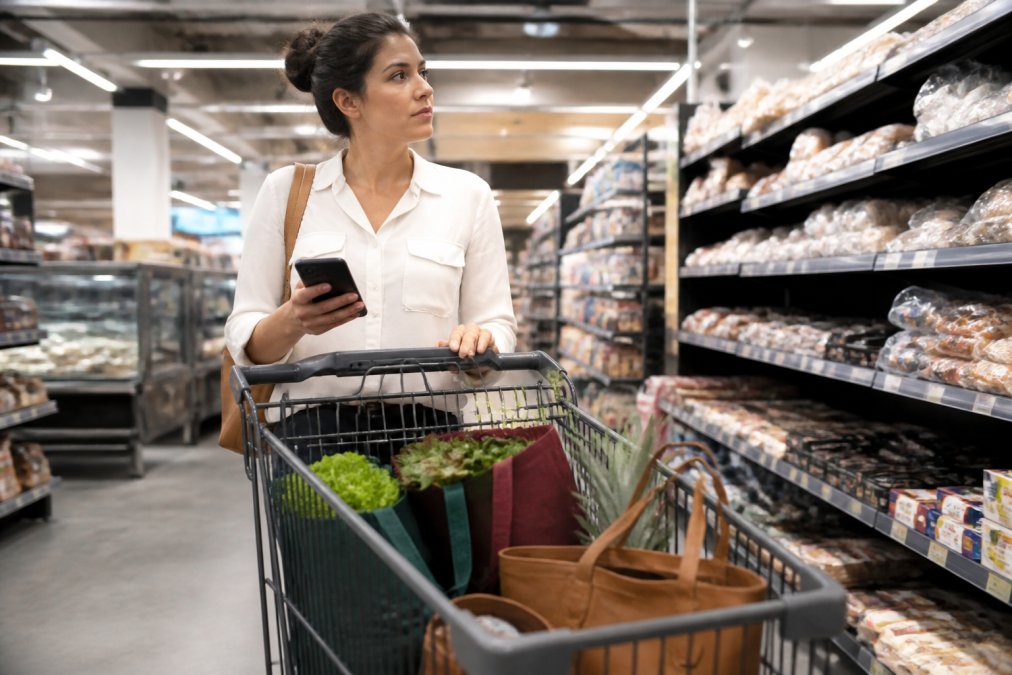
The center aisles of supermarkets contain processed foods, snacks, and items with longer shelf lives. The perimeter, produce, meat, dairy, frozen, contains the items most families actually need. Shopping the perimeter first and skipping the center aisles entirely cuts shopping time and reduces impulse purchases.
Self-checkout is faster than waiting in line, especially for smaller shopping trips. Many parents do two small trips weekly instead of one large one. Two 20-minute trips beat one 50-minute trip if your schedule allows.
Shop during off-peak hours if your schedule allows. Early morning or late evening means shorter lines and less crowding. A crowded store increases decision time because you're navigating around other shoppers.
Bring reusable bags and organize them before checkout. If you bag items as you shop, checkout takes seconds. This small habit saves time and prevents damage to fragile items.
Managing Impulse Buying and Dietary Restrictions
Impulse buying is the enemy of smart shopping strategies. Research on consumer behavior shows that impulse purchases spike when shoppers are in a state of decision fatigue, emotional stress, or time pressure, all conditions that describe the typical busy parent's shopping trip (peer-reviewed research).
Combat impulse buying by addressing the stress conditions that trigger it, not just willpower. Shop after eating, not before, hunger is a documented trigger for impulse purchases (peer-reviewed research). Set a firm time limit (30-45 minutes) and use a timer on your phone. Time pressure forces focus and prevents browsing, which is where impulse buying happens. Shop alone when possible. A parent managing children while shopping has divided attention and higher stress, both of which increase impulse buying.
Use your list as a psychological barrier. Before entering the store, read your list aloud or review it on your phone. This primes your brain to recognize items on the list as "correct" and off-list items as "distractions." When you see something not on your list, your brain has already categorized it as outside your plan.
For families with dietary restrictions, impulse buying becomes even more problematic because off-list purchases often violate dietary needs or create duplicate inventory. A shared digital list with dietary tags prevents this. Instead of writing "pasta," write "pasta (gluten-free, whole wheat preferred)." These notes take 10 seconds to add and eliminate the guesswork that leads to buying the wrong product.
Families with allergies, intolerances, or dietary preferences should maintain a separate section of the pantry for each household member's staples. If these items are buried or mixed with regular products, the parent is more likely to grab a convenience item when cooking time is short. Visible, organized, dedicated storage reduces the friction that leads to impulse purchases or dietary violations.
Bulk buying specialty items works well for families with dietary restrictions. If you buy gluten-free pasta, dairy-free milk, or specialty proteins in bulk quarterly, you reduce shopping frequency and always have backup inventory.
Read labels carefully at home, not in the store. Before your shopping trip, if you're considering a new product, look it up online or read reviews. Add only vetted products to your list. This prevents the in-store decision-making that leads to buying something that doesn't actually fit your family's needs.
Automating Your Pantry and Post-Shopping Workflow
Smart shopping strategies extend beyond the store into the entire post-shopping workflow: organizing what you bought, storing it properly, tracking what you use, and managing inventory so you never run out of essentials or overbuy.
Automate pantry staples through recurring orders for non-perishable items your family uses consistently. Rice, pasta, canned vegetables, cooking oils, and household essentials can be ordered monthly or quarterly online. This removes them from your weekly shopping list and ensures you never run out.
Integrate smart home technology into your shopping and inventory workflow. Voice assistants like Amazon Alexa or Google Assistant can be used to add items to your shopping list hands-free while cooking. Instead of stopping to write something down, say "Alexa, add milk to my shopping list." This removes friction from the list-building process and ensures items get added in the moment you notice you need them.
Smart refrigerators with built-in cameras allow you to check your fridge contents from your phone while you're at the store. If you're unsure whether you have milk or eggs, you can look at a photo of your fridge instead of guessing or buying duplicates.
Organize your pantry and refrigerator immediately after shopping using a system that makes items visible and accessible. Use clear storage containers to group similar items by category: breakfast items together, snacks together, baking supplies together. When you can see what you have without opening containers, you use it before it spoils.

For refrigerated items, use stackable clear bins to keep vegetables, dairy, and leftovers organized and visible. Label bins with masking tape and a marker so everyone knows where items belong.
For pantry organization, use drawer dividers and shelf risers to create zones. Vertical storage maximizes space and makes items visible. A parent looking for pasta can see all pasta options at once rather than hunting through a deep shelf.
Track what you actually use each week by keeping a running note in your phone or a shared document. Note items that get used up quickly versus items that sit untouched. This data shapes your next meal plan and shopping list. If you consistently buy bell peppers that spoil, either use them in more meals or buy fewer.
Create a "use first" section in your refrigerator for items nearing expiration. When you unload groceries, move older items to the front and new items to the back. This ensures older items get used first and prevents waste.
For families with children, involve them in the post-shopping workflow. Children can help unload bags, place items in their designated spots, and learn where things belong. This builds accountability and makes them more aware of what's in the house, which can reduce impulse requests for items you already have.
Frequently Asked Questions
Q: What is the most efficient way to organize a shopping list?
A: Organize your grocery list by store layout: produce, dairy, frozen, pantry staples, and household items. Group items by aisle to reduce backtracking and save time per trip. Digital lists work best because you can share them with family members in real-time, check off items as you shop, and add quantities. Apps sync across devices so everyone stays on the same page.
Q: How can busy parents save time on weekly grocery trips?
A: Use smart shopping strategies: shop the perimeter first (fresh items), batch your trips to once weekly, use online pickup services when possible, and prep your list before entering the store. Automating pantry staples through subscription or reorder options cuts decision fatigue. Meal planning reduces impulse buying and ensures you know exactly what you need, eliminating wandering and second-guessing at checkout.
Q: What are effective strategies for smart shopping on a budget?
A: Compare unit pricing rather than package price, buy pantry staples in bulk, use family collaboration tools to avoid duplicate purchases, and track spending with budget meal planning. Avoid impulse buying by shopping with a list and never shopping hungry. Set a budget ceiling before entering the store. Consider subscription services for items you buy regularly, which often offer discounts and reduce trips.
Q: How do you meal plan effectively when you are short on time?
A: Start with a simple weekly menu using 5-7 repeating dinner templates (taco night, pasta night, sheet pan meals). Write your grocery list directly from this menu. This approach eliminates decision paralysis, reduces food waste, and ensures you buy only what you need. Involve family members in meal selection to increase buy-in and reduce stress. Batch-prep ingredients on Sunday to streamline weeknight cooking.
This article was written using GrandRanker