

Is Buying Discounted Home Goods Worth It?
Table of Contents
- The Real Math: Savings vs. Hidden Costs of Discounted Home Goods
- How to Spot Quality Home Goods Before You Buy
- Best Discount Home Decor Stores: Where the Treasure Hunting Actually Pays Off
- The Psychology of Impulse Buying at Discount Stores
- Sustainability and Resale Value: The Long-Term Cost-Benefit Analysis
- Blue Body Pillow and Other Specific Items Worth the Discount
- Shopping Hacks That Actually Maximize Your Savings
- Conclusion: When Discount Home Goods Make Financial Sense
Last Updated: August 28, 2026
The Real Math: Savings vs. Hidden Costs of Discounted Home Goods
Discounted home goods can deliver genuine savings, but only if you account for durability, return policies, impulse purchases, and actual retail value. The math isn't as simple as "50% off equals a great deal."
A 50% discount on a product that falls apart in six months isn't a bargain. A modest discount on something you genuinely need and will use for years is. Start by understanding retail value: Is this legitimate overstock from a quality brand, or clearance merchandise that didn't sell for a reason? The difference between treasure hunting and wasting time often comes down to asking this single question before checkout.
How to Spot Quality Home Goods Before You Buy
Quality assessment in a discount environment requires a hands-on approach.
Material durability testing you can do in-store
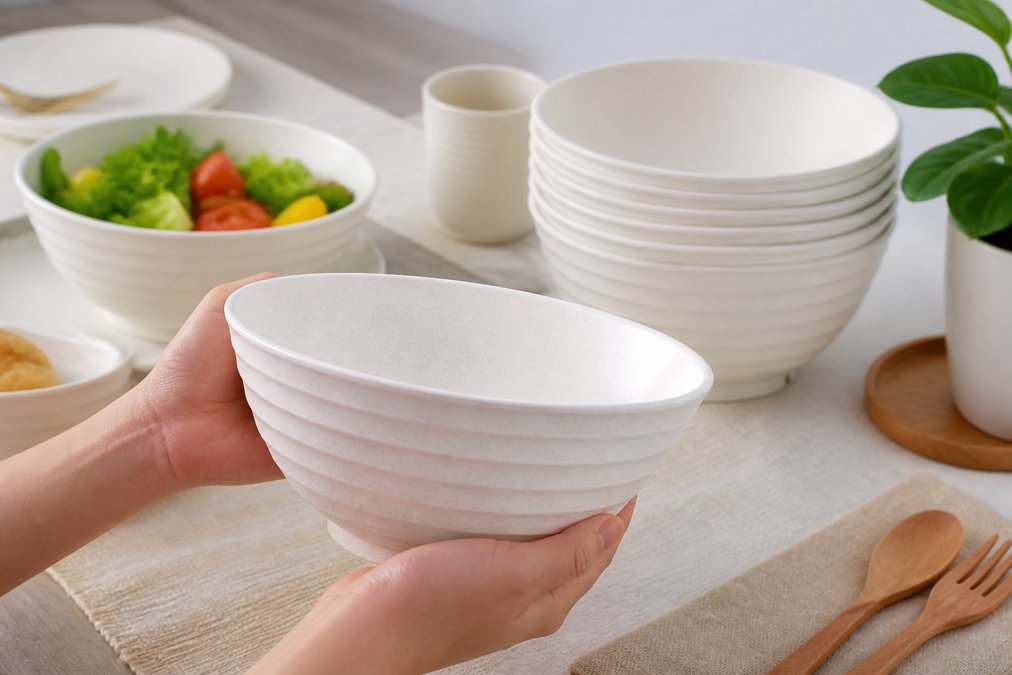
Run your fingers along seams and edges. Quality construction uses tight, even stitching with no loose threads or gaps. For bowls, plates, and dinnerware like the Wheat Straw Plates Unbreakable Dinner Plate 7.8 Inch available at TDR Shopper, check for cracks, discoloration, or warping.

For textiles, check fabric weight by holding the item to light. Thin, see-through fabric indicates low quality. Heavier fabric signals better construction. Flex items slightly; quality pieces return to shape immediately. Test hinges, zippers, and moving parts by opening and closing them multiple times, they should move smoothly without sticking or grinding sounds. For ceramic and glass items, run your hand inside; rough edges indicate lower quality.
Red flags that signal clearance junk vs. legitimate overstock
Significant discoloration, stains, or visible damage means the item was likely returned. Legitimate overstock items are typically in perfect condition. Check for strong chemical smells, overwhelming odors suggest poor quality materials or improper storage. Mismatched components or inconsistent colors indicate returns or assembly errors. Look for signs of previous use: worn areas, fading, or marks suggesting the item was used and returned.
Best Discount Home Decor Stores: Where the Treasure Hunting Actually Pays Off
Not all discount retailers operate the same way. Some specialize in legitimate overstock from quality brands; others focus on clearance merchandise.
TDR Shopper stands out because it curates inventory specifically for value-conscious shoppers. Rather than random closeout merchandise, TDR Shopper sources quality products across kitchen, home, fashion, and more at consistent 50% discounts. The curated approach means less time digging through junk and more time finding items you actually need.
Inventory turnover and stock rotation patterns
Items that move quickly stay fresher and more current. When you shop at retailers with high inventory turnover, you're getting more recent stock and better condition merchandise. Check what's on shelves during visits; if you see the exact same items week after week, that signals slow turnover and potential quality concerns.
Comparing markdown strategies across retailers
Retailers offering consistent 50% discounts across categories typically work with different supplier relationships or higher volume purchasing power. Those discounting heavily only on specific items are often clearing inventory they couldn't sell, a red flag for quality or desirability issues. The most reliable discount strategy is consistent pricing across a curated selection, signaling confidence in quality.
The Psychology of Impulse Buying at Discount Stores
Discount environments trigger impulse buying through scarcity and anchor pricing. When you see an item marked down significantly, your brain interprets it as a limited opportunity, triggering urgency. Anchor pricing amplifies this: seeing "regularly $40, now $20" makes you celebrate savings even if that item normally sells for $25 elsewhere.
Combat impulse buying with a simple rule: only purchase items you've already identified as needing. Make a list before you shop and stick to it. This transforms discount shopping from treasure hunting into intentional shopping that maximizes actual savings.
Sustainability and Resale Value: The Long-Term Cost-Benefit Analysis
Buying discounted home goods has environmental implications. When items are manufactured cheaply, they fail faster, leading to more waste and frequent replacement purchases.
Quality discounted items, particularly those made from sustainable materials like the Unbreakable Cereal Bowls made from wheat straw, offer better long-term value. Wheat straw bowls are eco-friendly, durable, dishwasher and microwave safe, and often last longer than cheaper ceramic alternatives.

Consider resale value when evaluating long-term cost. Quality items hold value; cheap clearance items often have no resale market. Calculate total cost of ownership, not just purchase price. A $10 item lasting six months costs more per month than a $20 item lasting three years. Discounted quality items beat cheap clearance merchandise on both financial and environmental grounds.
Blue Body Pillow and Other Specific Items Worth the Discount
Some product categories are genuinely worth buying at discount. Body pillows are often overpriced at traditional retailers; a $60 department store pillow might sell for $30 at a discount retailer with identical quality.
Seasonal home goods are excellent discount candidates. Off-season items are heavily discounted because retailers need to clear space. Dinnerware and kitchen items are consistently good discount buys; retailers overproduce these items, creating genuine overstock. Sets like the NOT CERAMIC60 Oz Big Salad Bowl Set of 8 are often discounted because of excess inventory.
Avoid discounted items in categories where quality varies significantly: electronics, appliances, and certain furniture. A discounted TV might be a returned item with a defect; a discounted mattress might have been floor-displayed. In these categories, the discount often signals a problem rather than an opportunity.
Shopping Hacks That Actually Maximize Your Savings
The most effective discount shopping strategies have nothing to do with finding the deepest discounts, they're about making smarter decisions.

First, price-check before you buy using your phone to search for the item at other retailers. Second, shop with a calculator; discount retailers often sell in bulk, so calculate per-unit cost and compare it to single items at regular retailers. Third, time your shopping for end-of-season and end-of-month when retailers need to clear inventory. Fourth, build relationships with staff who often know when new inventory arrives and which items are about to be marked down further. Fifth, use loyalty programs if available to gain additional discounts or early access to sales.
| Shopping Strategy | Best For | Typical Savings | Time Investment |
|---|---|---|---|
| Price-checking before purchase | High-value items | 10-20% additional savings | 5 minutes per item |
| Per-unit cost calculation | Bulk purchases | Avoiding overpaying for quantity | 2 minutes per set |
| End-of-season shopping | Seasonal items | 40-60% off regular prices | Timing dependent |
| Staff relationships | Regular shopping | Early access to best deals | Ongoing |
| Loyalty programs | Frequent shoppers | 5-15% additional savings | One-time enrollment |
Conclusion: When Discount Home Goods Make Financial Sense
Buying discounted home goods makes sense when you're intentional about what you buy and verify quality before checkout. The math works when you're purchasing items you actually need, evaluating durability carefully, and understanding the difference between legitimate overstock and clearance junk.
TDR Shopper makes this calculation easier by curating quality products at consistent 50% discounts across kitchen, home, fashion, and lifestyle categories. Rather than spending hours sorting through random clearance items, you're shopping from a curated selection where quality standards are already applied. The key is matching your shopping approach to your actual needs: if you're buying specific items you've identified in advance, evaluating quality carefully, and avoiding impulse purchases, discount home goods deliver real value.
Frequently Asked Questions
Q: Are discounted home goods typically overstock or irregular items?
A: Most discounted home goods fall into three categories: overstock from previous seasons, items with minor cosmetic damage or packaging issues, and slow-moving inventory. Retailers use markdown strategies to clear shelf space for new merchandise. Understanding which category you're buying helps assess whether the discount reflects genuine value or signs of quality problems. Check product condition carefully and read return policies before purchase.
Q: What should you avoid buying at discount home stores?
A: Avoid mattresses, pillows with unknown materials, electrical items without clear warranties, and anything with missing safety documentation. Discount retailers often stock items with irregular quality control, so products requiring specific performance standards, like appliances or items affecting sleep quality, such as a blue body pillow, warrant extra scrutiny. Always verify return policies for these categories before committing.
Q: How can I tell if discounted home goods are actually cheaper than big-box stores?
A: Compare the original retail value listed on packaging or tags against current prices at major retailers like Walmart or Amazon. Calculate the actual percentage savings, not just the discount store's asking price. Factor in durability: a $5 plate that breaks in three months costs more than a $8 plate lasting five years. Use comparable retail values and resale potential to determine true value-for-money, not just the lowest price point.
Q: Is shopping at discount home retailers worth the time investment?
A: Treasure hunting at discount stores takes time, inventory rotates frequently and stock is unpredictable. If you need specific items quickly, big-box retailers offer convenience. However, if you enjoy browsing and have flexible timelines, discount retailers reward patience with significant savings on home furnishings and kitchen essentials. TDR Shopper's curated selection reduces browsing time while maintaining the 50% discount advantage, making intentional shopping more efficient than traditional treasure hunting.
Start building your discounted home goods collection with TDR Shopper. Browse kitchen essentials like wheat straw bowls and plates, discover home decor items across multiple categories, and enjoy 50% off your entire purchase. Shop now and experience how real discounts on quality merchandise actually work.
This article was written using GrandRanker