

How to Return Items from Online Retailers
Table of Contents
- Understanding Online Return Policy Requirements
- What You'll Need Before You Return Items from Online Retailers
- How to Document Damaged Items for Returns
- Step-by-Step: How to Return Items from Online Retailers
- Refund Processing Times: What to Expect
- Common Return Mistakes and How to Avoid Them
- Special Situations: International Returns, Digital Items, and Eco-Friendly Packaging
- Conclusion
Last Updated: August 18, 2026
Understanding Online Return Policy Requirements
Reading the return policy before your package arrives is the first step most shoppers skip. Every retailer sets its own rules, and those rules vary significantly.
A return policy is the set of terms a retailer establishes that governs whether, when, and how a customer may send back a purchased item for a refund, exchange, or store credit. These policies are legally binding contracts, and understanding them upfront saves significant frustration later.
The Federal Trade Commission's consumer guidance on online shopping outlines baseline consumer rights when purchasing from online retailers, but it's the individual retailer's policy that governs most return situations. That means the burden is on you to read the fine print.
Return Windows, Restocking Fees, and Non-Returnable Items
Most online retailers set a return window, the number of days after delivery during which you can initiate a return. Common windows range from 14 to 90 days, though some retailers extend this during the holiday season.
Watch for these three policy elements that catch shoppers off guard:
- Restocking fees: Some retailers deduct a percentage from your refund to cover handling costs, particularly for electronics or large items.
- Non-returnable items: Final sale merchandise, opened personal care products, digital downloads, and custom or personalized items are frequently excluded from return eligibility.
- Condition requirements: Most retailers require items to be in original, unused condition with original packaging intact. Removing tags or using an item even once can void your return eligibility.
| Policy Element | What to Check | Why It Matters |
|---|---|---|
| Return window | Days from delivery vs. days from order | Missing the deadline voids the return |
| Restocking fee | Percentage deducted from refund | Reduces actual money back |
| Item condition | Unused, tags attached, original packaging | Condition determines return approval |
| Non-returnable items | Final sale, digital, personal care | No refund possible regardless of reason |
| Proof of purchase | Receipt, order confirmation, transaction ID | Required to process any return |
What You'll Need Before You Return Items from Online Retailers
Gather these items before you initiate anything. Missing even one can stall your return or get it denied outright.
Proof of purchase is non-negotiable. This means your order confirmation email, a digital receipt, or a packaging slip included with the shipment. Retailers use the transaction ID or order number to locate your purchase in their system.
Here's a practical checklist:
- Order confirmation email or receipt with transaction ID
- Original packaging (box, poly mailer, or product box with barcode)
- All accessories, manuals, and included items
- Any tags still attached to the item
- Photos of the item's current condition (especially if damaged)
- The return authorization number, if the retailer requires one
- A credit or debit card on file (some carriers charge return shipping)
Check whether the retailer requires a return authorization (RA) number before you ship anything back. Sending a package without one can result in the return being refused at the warehouse.
How to Document Damaged Items for Returns
Receiving a damaged item is frustrating, but how you document it determines whether you get a full refund or a fight.
Photograph the damage immediately upon opening the package. Take multiple shots: the exterior of the shipping box showing any dents or tears, the interior packaging, and close-up images of the defect on the item itself. Use good lighting and shoot from multiple angles. Photographic evidence is the strongest form of documentation for damaged goods disputes, as noted in guidance from the Consumer Financial Protection Bureau on dispute resolution.
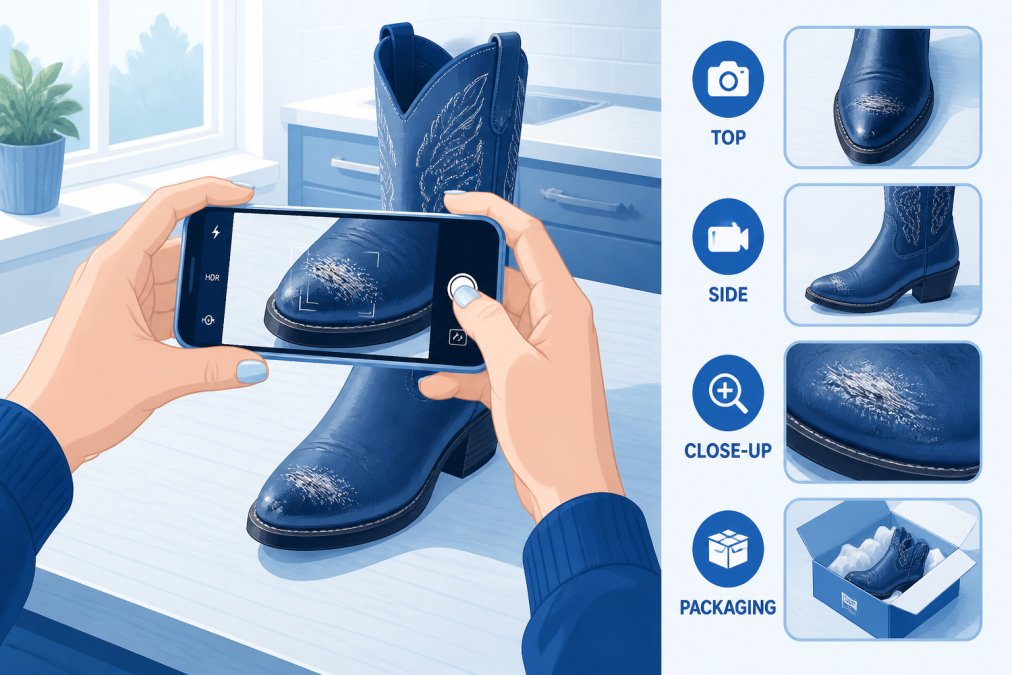
Follow these documentation steps:
- Photograph the sealed package before opening it
- Photograph the packaging material inside (bubble wrap, foam, paper)
- Photograph the item from all four sides
- Take a close-up of the specific damage or defect
- Note the date and time on your device so metadata is preserved
- Write a brief description of the damage in your own words
Keep all original packaging until the return is fully resolved and your refund has been processed. Retailers and carriers sometimes request the original box as part of a damage claim investigation.
Step-by-Step: How to Return Items from Online Retailers
Here's the complete process for how to return items from online retailers, from initiation to refund confirmation.
Step 1: Locate the Return Portal or Contact Customer Service
Most major retailers now offer a self-service return portal accessible through your account's order history. Log in, find the relevant order, and look for a "Return" or "Request Return" option. If no portal exists, contact customer service directly via chat, email, or phone.
Have your order number, item description, and reason for return ready. The reason matters: "defective item" and "changed my mind" often trigger different return workflows, and some retailers only offer free return shipping for defective goods.
Step 2: Choose Your Return Method, Mail or In-Store
Mail returns are the default for online purchases. The retailer will typically generate a prepaid shipping label or ask you to purchase postage and submit for reimbursement.
In-store returns are available when the retailer operates physical locations. You walk out with your refund or exchange immediately rather than waiting for the item to be received and processed. Bring your proof of purchase and the item in its original packaging.
Some retailers partner with third-party drop-off locations that accept returns on their behalf. Check the retailer's return portal for nearby drop-off locations before defaulting to a post office.
Step 3: Pack the Item and Attach Your Shipping Label
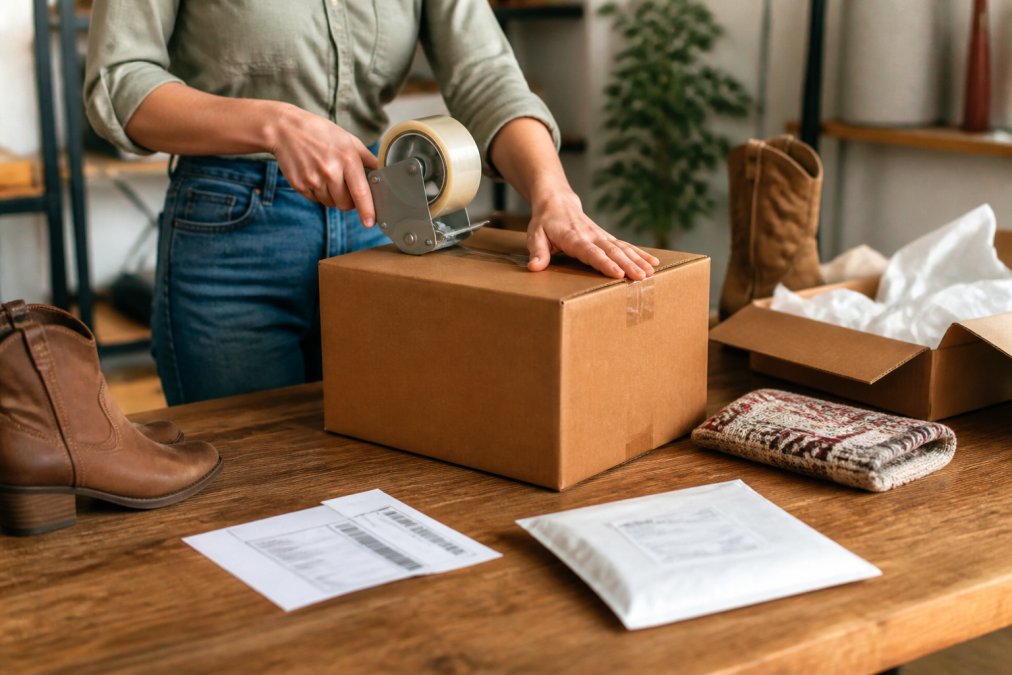
Repack the item securely. Use the original packaging if possible, as it's designed for the product and demonstrates that you've maintained the item in proper condition. If the original box is unavailable, use a sturdy box with adequate cushioning material.
Include the packaging slip or a printed copy of your return authorization inside the box. Attach the shipping label to the outside of the package, covering any previous shipping labels or barcodes.
Step 4: Drop Off and Track Your Return
Drop the package at the designated carrier location or drop-off point specified on your shipping label. Get a receipt or scan confirmation from the carrier, which gives you a tracking number to monitor the return shipment.
Use the tracking number to verify the package has been received by the retailer. Most return portals update automatically once the warehouse scans the item in. Save all tracking information until your refund appears.
Refund Processing Times: What to Expect
Refund processing time is the period between a retailer receiving your returned item and the money appearing in your account. The FTC's rules on prompt refunds for mail, internet, and telephone orders requires that refunds be issued within a specific timeframe once a return is accepted, though the exact timing varies by payment method and retailer.
A general timeline looks like this:
- Carrier transit: 2-7 business days for the package to reach the retailer's warehouse
- Warehouse processing: 1-5 business days for the item to be inspected and the return logged
- Refund initiation: 1-3 business days for the retailer to process the credit
- Bank or card processing: 3-10 business days for the funds to appear in your account
Credit card refunds typically take longer than debit card refunds. Store credit is almost always issued faster than cash refunds because it doesn't require a bank transaction.
If your refund window has passed and nothing has appeared, contact the retailer with your return tracking number and the date the warehouse received the package.
Common Return Mistakes and How to Avoid Them
The biggest return mistake is waiting. Most return windows are strict, and retailers rarely make exceptions once the deadline passes. If you know you want to return something, initiate the process the same day you make that decision.
Other frequent errors:
- Discarding the original packaging before deciding to keep the item
- Washing or using an item before confirming it's the right size or fit
- Missing the return window because you assumed you had more time
- Failing to get a drop-off receipt, leaving no proof the package was sent
- Not checking whether a restocking fee applies, resulting in a smaller refund than expected
Return Fraud, Account Health, and Why It Matters
Return fraud is a real problem that affects every online shopper. Return fraud involves abusing return systems: returning used items as new, claiming items never arrived when they did, or making excessive returns to exploit free return shipping. Retailers track return behavior at the account level, and many use automated systems to flag accounts with unusually high return rates.
If your account shows a pattern of frequent returns, a retailer may limit your return privileges, require you to pay return shipping costs, or in extreme cases, close your account.
Protect your account health by:
- Only returning items you genuinely cannot use
- Being accurate about return reasons
- Keeping your return rate reasonable relative to your purchase volume
Special Situations: International Returns, Digital Items, and Eco-Friendly Packaging
Some return situations fall outside the standard process.
International returns add significant complexity. Return shipping costs across international borders can be substantial, customs documentation is required, and processing times are longer. Many retailers exclude international orders from free return shipping entirely. Before purchasing from an international seller, check whether the return policy covers cross-border shipments and who bears the return shipping cost. The U.S. Customs and Border Protection guidance on returning goods outlines documentation requirements for items being shipped back across international borders.
Digital and virtual items are almost never returnable under standard return policies. Software activation keys, digital downloads, and virtual subscriptions are typically excluded once accessed. If you're purchasing a digital product, read the refund terms carefully before completing the transaction.
Eco-friendly return packaging is an emerging consideration. Rather than using new boxes and excessive bubble wrap for every return, many shoppers reuse the original shipping materials when they're intact. Some retailers now offer reusable return bags or accept returns in minimal packaging at designated drop-off points.
If you're shopping at TDR Shopper, the return process follows the same core principles outlined here. Understanding these steps means you can shop confidently across any category, knowing you have a clear path forward if something doesn't work out.
Handling returns doesn't have to feel like a bureaucratic obstacle. The process is predictable once you know the steps: check the policy first, document everything, initiate through the official portal, and track the shipment until the refund clears. TDR Shopper offers a curated selection of quality products at 50% off across dozens of categories, making it easy to shop with confidence. Browse the collection and add to cart, and if something isn't right, you now have everything you need to handle it.
Frequently Asked Questions
Can I return something I bought online to the actual store?
Many retailers allow in-store returns for online purchases, but not all. Check the return policy on the retailer's website before heading to a location. You'll typically need your order confirmation email, the original packaging, and a valid photo ID. Some retailers process the refund immediately at the register, while others issue store credit. If in-store returns aren't available, you'll need to ship the item back using a prepaid label or at your own cost.
How long does it usually take to receive a refund for an online return?
Refund processing times vary by retailer and payment method. Once the carrier scans your return at a drop-off location, most retailers take 3-10 business days to inspect and process the item. After that, your bank or card issuer may take an additional 2-5 business days to post the credit. Store credit refunds typically appear faster than credit card refunds. Always save your tracking number so you can confirm the return was received if a refund is delayed.
Which items are typically non-returnable?
Most online retailers exclude certain categories from their return policy. Common non-returnable items include opened software or digital downloads, perishable goods, intimate apparel, hazardous materials, and items marked 'final sale' at checkout. Gift cards are almost never refundable. Defective items in these categories may still qualify for an exchange or store credit under consumer protection principles, so it's worth contacting customer service directly if you received a damaged or misrepresented product.
What should I do if a retailer refuses my return?
Start by reviewing the return policy you agreed to at purchase, check your order confirmation for the exact terms. If you believe the refusal violates those terms or you received a defective item, escalate to a supervisor or file a complaint through the retailer's dispute process. You can also dispute the charge with your credit card issuer under the Fair Credit Billing Act if the item was significantly not as described. Keep all documentation: photos, emails, and your transaction ID.
This article was written using GrandRanker