

How to Maximize Savings on Kitchen Gadgets
Table of Contents
- The Real Math Behind Kitchen Gadget Savings
- Calculate Your Kitchen Gadgets Savings ROI
- Best Time to Buy Kitchen Appliances and Gadgets
- How to Find Kitchen Gadget Coupons That Work
- Refurbished vs New Kitchen Gadgets: Which Saves More?
- Cut Waste and Boost Savings with Smart Storage
- Conclusion: Your Kitchen Gadgets Savings Plan
- Frequently Asked Questions
Last Updated: September 5, 2026
The average household owns dozens of kitchen gadgets, yet most get used a handful of times before being relegated to a cluttered drawer. This guide from TDR Shopper breaks down how to maximize savings by focusing on cost-per-use, timing purchases around major sales events, and investing in organization that prevents waste.
The Real Math Behind Kitchen Gadget Savings
Most shoppers approach kitchen gadget purchases backwards. They see a 50% discount on a specialty tool and assume they are saving money, when in reality they have just paid for something used twice a year. Purchase price matters far less than cost-per-use over the gadget's lifetime.
A durable, multi-functional tool that costs more upfront but gets used weekly is a better long-term investment than a cheap, single-purpose gadget that breaks after a few months. This quality vs quantity mindset extends to everything from cookware to small appliances. When you factor in replacement costs, a $30 tool that lasts five years often beats a $15 tool that needs replacing every year. The consumer guidance on durable goods and repairability consistently shows that spending slightly more on tested and reviewed, durable items reduces total spending over time.
Calculate Your Kitchen Gadgets Savings ROI
To truly understand how to maximize savings, use a simple return on investment calculation: divide the total cost of the gadget by the number of times you realistically expect to use it in a year. This gives you your annual cost-per-use, which you can compare against a less expensive alternative or even the cost of eating out.
For example, a high-end blender at $120 used three times a week costs roughly $1.50 per use in the first year. A $40 knockoff that fails after six months costs more in replacement and frustration.
Cost-Per-Use: The Only Metric That Matters
The cost-per-use metric is the single most effective way to filter out impulse buys. Before adding any kitchen gadget to your cart, ask yourself how often you will use it. If the answer is less than once a week, the savings potential evaporates regardless of the discount.
- Daily use (coffee maker, chef's knife): Worth investing in high quality.
- Weekly use (air fryer, stand mixer): Justify a moderate budget based on durability.
- Monthly or less (specialty cake pans, spiralizers): Skip them or buy budget-friendly versions.
By applying this filter, you naturally reduce kitchen gadget clutter. Owning fewer, better tools means less money spent on organization and maintenance.
Best Time to Buy Kitchen Appliances and Gadgets
Timing your purchases around major sales events is one of the most effective ways to maximize savings. Retailers discount kitchen appliances on a predictable calendar, but the generic advice to 'wait for a holiday sale' is not enough, you need a month-by-month playbook to know when each category hits its lowest price.
The best windows are typically during major holiday weekends, but discounts vary by category. Small electrics like blenders and air fryers see deep discounts during the winter holiday season, while outdoor cooking gear drops during fall clearance. If you are not in a rush, tracking prices over a few weeks using price tracking tools or price matching policies can help you strike at the lowest point.
Here is the granular calendar that most shoppers miss:
- January (Post-Holiday Clearance): This is the single best month for cookware sets, knife blocks, and food storage containers. Retailers need to clear out holiday inventory to make room for spring merchandise, and markdowns often reach 50-70% off. Stand mixers and high-end blenders that were doorbusters in December frequently get one final price cut in mid-January.
- February (Pre-Spring Inventory Shift): Air fryers, slow cookers, and other 'comfort food' appliances hit their lowest prices of the year as retailers pivot to grilling and outdoor cooking displays. If you have been eyeing a specific model, this is often the quiet sweet spot before the summer demand spike.
- May (Memorial Day): This is the primary window for outdoor cooking gear, gas grills, pellet smokers, and pizza ovens. Expect bundle deals where a grill comes with a cover and tools at a combined discount that beats buying separately.
- July (Prime Day and Mid-Summer): Amazon's Prime Day in mid-July has forced competing retailers like Target and Walmart to run simultaneous 'Black Friday in July' events. Small electrics, especially Instant Pots, blenders, and coffee makers, see aggressive doorbuster pricing. You do not need a Prime membership to benefit; most competitors match or beat the prices.
- November (Pre-Black Friday): The week before Black Friday is when retailers quietly drop prices on large appliances and premium cookware to test demand. Price tracking tools often show that the 'Black Friday price' was actually available two weeks earlier. Do not wait for the day itself if you see a deal that meets your target price.
- December (Winter Holiday Doorbusters): The final two weeks of December are the best time for small electrics and specialty gadgets. Retailers are competing for last-minute gift shoppers, and the discounts on popular items like air fryers, espresso machines, and stand mixers reach their annual floor.
| Purchase Strategy | Best Timeframe | What to Expect |
|---|---|---|
| Large Appliances | November (pre-Black Friday) | Deep discounts on bundles with installation |
| Small Electrics | July (Prime Day) or December | Doorbuster deals on popular items |
| Cookware Sets | January (post-holiday) | Steep markdowns on overstock |
| Specialty Gadgets | End of season (March/August) | Clearance on single-purpose tools |
| Outdoor Cooking | May (Memorial Day) | Bundle deals with accessories |
A practical mechanism most shoppers overlook is the 'price drop notification' feature built into most major retailer apps. Setting a target price on the specific model you want means you get a push notification the moment the price drops. Combine this with a retailer's price adjustment policy: many major chains will refund the difference if the price drops within 14-30 days of your purchase, effectively letting you buy early and still capture the sale price later.
How to Find Kitchen Gadget Coupons That Work
Finding active kitchen gadget coupons requires more than a quick web search. Many retailer promotions are exclusive to email lists or loyalty programs, so signing up for newsletters from your preferred stores often yields a welcome discount code. Stacking a store coupon with a cashback offer or a retailer promotion is a common approach to squeeze out additional savings.
Another strategy is using price tracking tools and price matching. Many major retailers will match a lower price found at a competing store, so you do not have to wait for a sale if you find a better deal elsewhere. For everyday essentials like storage bins and organizer trays, checking the clearance section of a one-stop shop like TDR Shopper can reveal significant cost savings.

Refurbished vs New Kitchen Gadgets: Which Saves More?
For larger appliances and premium mixers, buying refurbished is a legitimate way to maximize savings. Refurbished models are typically tested and repaired by the manufacturer to work like new, but they come at a fraction of the retail price. The trade-off is usually a shorter warranty and less attractive packaging.
The key is to distinguish between manufacturer-refurbished units and used items sold by third parties. A manufacturer-certified refurbished gadget is often a better value than a new budget model because you get the durability of a premium brand for less. However, for small, inexpensive gadgets, the savings are often too small to justify the risk. The secondary market is best reserved for high-cost items where the discount offsets the lack of a full warranty.
Cut Waste and Boost Savings with Smart Storage
The final piece of the savings puzzle is reducing food waste, a hidden cost that dwarfs the price of most gadgets. Effective kitchen organization directly impacts how much food you throw away. When you can see what you have, you are more likely to use it before it spoils. But the savings opportunity goes deeper than drawer organizers, it extends to how your gadgets consume energy and how your storage choices affect food longevity and your utility bill.
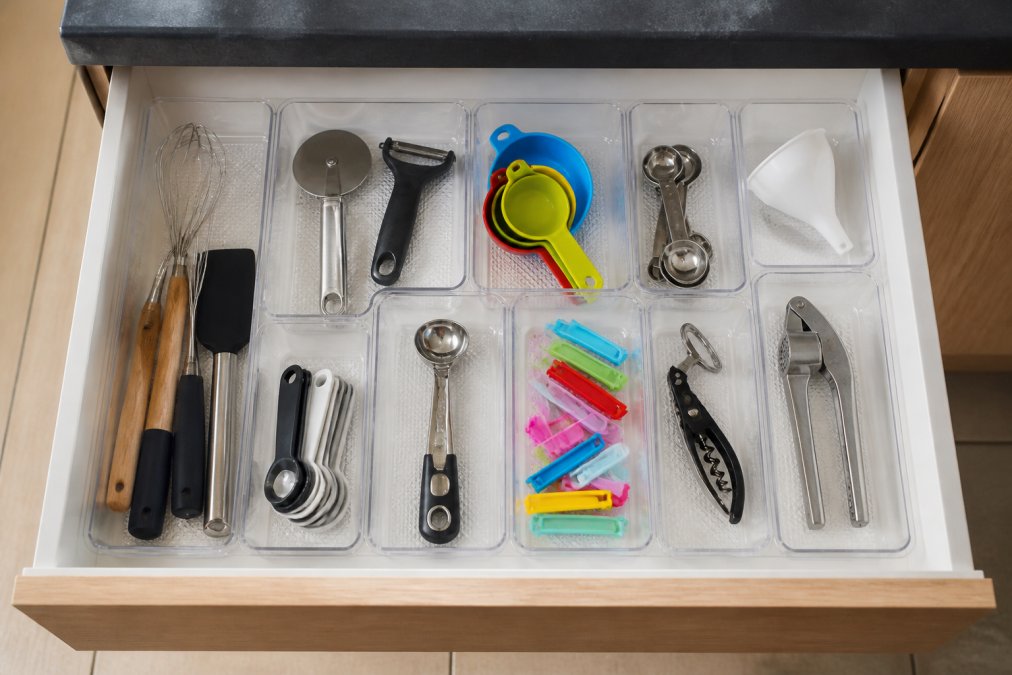
Investing in clear storage bins and drawer organizers is a budget-friendly way to extend the shelf life of produce and keep your pantry visible. Tools like the 10 Pack Refrigerator Pantry Organizer Bins help prevent freezer burn and keep ingredients accessible, encouraging home cooking over takeout. Similarly, a 2 Pcs Magnetic Spice Rack frees up counter space and keeps seasonings within reach, reducing the chance of buying duplicates.

The Energy Efficiency Angle Most Guides Miss
Here is a unique angle that the typical 'buy more organizers' advice overlooks: the energy efficiency of the gadgets you store. The U.S. Department of Energy publishes estimated annual energy consumption figures for common kitchen appliances, revealing that the choice between gadgets, not just the price tag, drives long-term savings.
Consider the difference between an air fryer and a conventional oven. A typical countertop air fryer draws about 1,400-1,700 watts, while a standard electric oven draws 2,400-4,000 watts when preheating and maintaining temperature (energy.gov). Because an air fryer's smaller cavity heats up faster and requires less total energy, cooking a frozen meal or roasting vegetables in an air fryer typically uses 30-50% less electricity than the same task in a full-size oven. Over a year of weekly use, that difference translates to roughly $15-25 in electricity savings, enough to offset the air fryer's purchase price within two to three years.
Similarly, a slow cooker (crockpot) draws only 70-250 watts over an 8-hour cooking cycle, making it dramatically more efficient than simmering a pot on an electric stovetop burner (which draws 1,500-2,500 watts). For households that cook beans, stews, or pulled chicken weekly, the slow cooker can save $30-50 annually in electricity compared to stovetop methods.
The Storage-to-Efficiency Connection
Your storage choices directly affect these energy savings. A gadget buried in a cabinet or drawer is a gadget you will not use, and when you skip the air fryer because it is hard to reach, you default to the oven, which costs more to run. The 'visible storage' principle is about ensuring your most energy-efficient tools are the ones you reach for first.
A practical framework for this is the countertop rule: keep your top three most-used energy-efficient gadgets (air fryer, slow cooker, electric kettle) visible and accessible on the counter or in an open shelf. Store the energy-hungry alternatives (full-size oven, stovetop) as the default only when batch cooking. This simple behavioral shift, driven by storage, compounds the energy savings month over month.
Extending Food Life with Proper Storage
The other half of the waste equation is food spoilage. The U.S. Department of Agriculture estimates that the average household throws away 30-40% of the food it buys, which for a family of four can mean $1,200-1,600 lost annually (usda.gov). Proper storage gadgets directly attack this number:
- Produce preservation: Airtight containers with moisture-control vents extend leafy greens from 3-4 days to 7-10 days. If that keeps even one bag of salad greens ($3-4) from spoiling each week, the container pays for itself in under a month.
- Freezer organization: Clear, stackable freezer bins prevent 'freezer burn waste', the phenomenon where food gets buried, forgotten, and eventually tossed. When you can see everything, you plan meals around what needs to be used first.
- Vacuum sealing: A $30-50 vacuum sealer can extend the freezer life of meat from 3 months to 12-18 months. For households that buy meat in bulk when it is on sale, this single gadget prevents the most expensive category of food waste.
The ROI Framework for Storage Gadgets
Apply the same cost-per-use math from earlier in this guide to your storage purchases. A $10 organizer that prevents $5 of food waste per week pays for itself in two weeks. A $40 vacuum sealer that saves $15 of meat per month pays for itself in under three months. By contrast, a $100 specialty appliance used twice a year may never pay for itself.
Conclusion: Your Kitchen Gadgets Savings Plan
Saving money on kitchen gadgets is less about finding the biggest discount and more about a disciplined approach to purchasing and maintenance. By calculating the ROI of every potential buy, timing your purchases around major sales events, and organizing your kitchen to prevent waste, you can cut your spending significantly. Explore the curated selection of tools and organizers at TDR Shopper to start building a kitchen that pays for itself.
Frequently Asked Questions
What is the best way to save money on kitchen gadgets?
The best method combines timing your purchases around major sales events with calculating cost-per-use before you buy. Focus on durable, multi-functional tools you will use weekly. Track prices with apps and stack coupon codes during seasonal clearances. Buying storage organizers to keep gadgets visible also prevents duplicate purchases, which is a hidden source of kitchen gadget savings.
Are refurbished kitchen gadgets a safe way to save money?
Yes, when you buy from a reputable seller that offers a warranty. Refurbished items are typically tested and repaired by the manufacturer, so they often work like new for less than retail. The risk is lower for gadgets without moving parts, like mixers or blenders, than for complex electronics. Always confirm the return policy before purchasing.
How can I spot fake discounts when shopping for kitchenware?
Check the price history using a tool like CamelCamelCamel or Keepa instead of trusting the struck-through list price. Retailers sometimes inflate the original price before a sale to make the discount look larger. Compare the price per unit or per use against durable alternatives. A $30 gadget used twice a year is more expensive than a $100 one used weekly.
When is the best time of year to buy kitchen gadgets on sale?
Major sales events like Black Friday, Cyber Monday, and Amazon Prime Day offer deep discounts on popular gadgets. January is also strong because retailers clear out holiday inventory. Look for new model releases in spring, which drop prices on previous versions. End-of-season sales in late summer can yield savings on grilling and outdoor cooking tools.
This article was written using GrandRanker